 中文简体
中文简体
 English
 Español
 عربى
عربى
Content
What Is Digital Printing Velvet?
A furniture importer recently rejected a velvet sample because a deep navy blue bled into the white design after three washes. The problem was not the design or the printing machine. It was the base fabric. Too many buyers assume that any velvet can go directly to the printer, but digital printing velvet demands a specifically prepared base to hold color and achieve sharp definition.
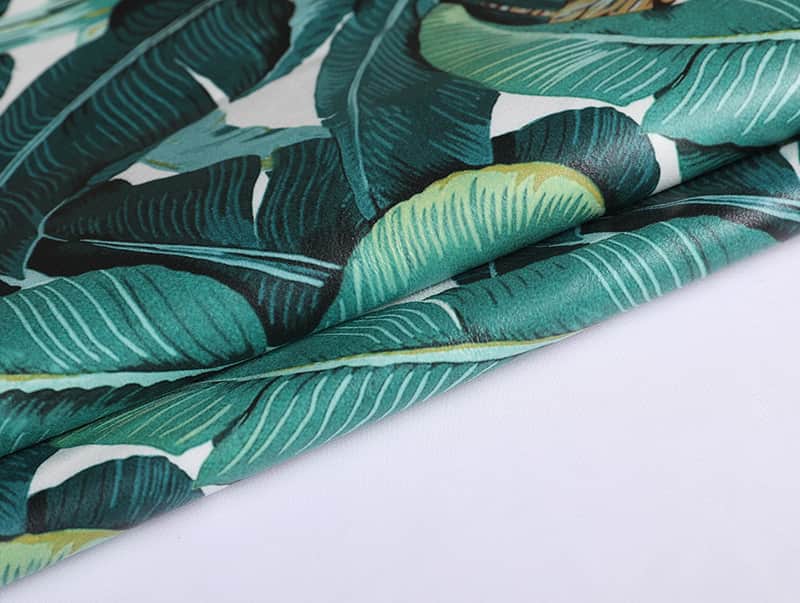
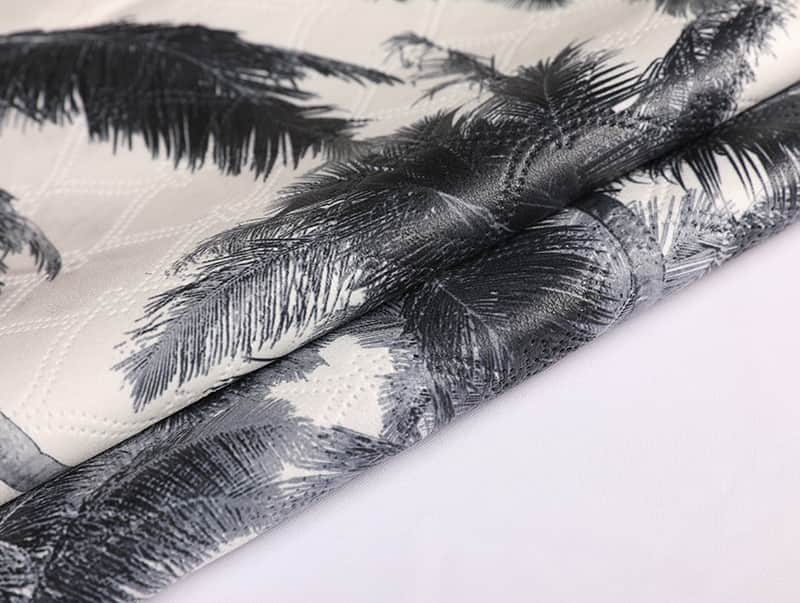
Digital printing on velvet uses inkjet technology to apply disperse dyes or pigment inks directly onto the pile surface or via a transfer paper mechanism. For polyester warp-knitted velvet, which our factory focuses on, the high temperature and pressure required for disperse dye sublimation open the fiber structure to absorb color. Without a PFP (prepared for printing) base, you will never achieve commercial-grade colorfastness or pattern clarity. PFP velvet is scoured, bleached, and heat-set to remove all sizing agents and impurities, leaving a clean, receptive surface. PFD (prepared for dyeing) is a similar concept but may need further processing before printing. Greige velvet straight from the knitting machine still contains oils and warp sizes that repel ink and cause patchy coverage.
| Type | Processing | Print outcome |
|---|---|---|
| Greige (raw) velvet | No pre-treatment; contains sizing agents and impurities | Poor dye uptake; dull colors and patchy coverage |
| PFP velvet | Scoured, bleached, and heat-set; no optical brighteners | Excellent print clarity; sharp lines and full color spectrum |
| PFD velvet | Scoured; prepared for dyeing but may need further processing | Consistent fabric hand; reliable base for uniform color penetration |
Colorfastness is another dimension buyers often overlook. A properly prepared PFP velvet printed with disperse dyes and fixed through high-temperature steaming will typically achieve a wash fastness of grade 4 or higher and light fastness of grade 5–6 on the blue wool scale. That performance makes the fabric suitable for upholstery and curtain applications under daily use. Always request the manufacturer’s latest test report for rub fastness and light fastness before approving a sample.
Why Source Digital Printing Velvet from China?
The decision to source from China is rarely about price alone. It is about speed of custom development, production depth, and access to a vertically integrated supply chain that few other origins can match. The Haining warp knitting cluster, where our factory has operated since 2002, concentrates every service from yarn procurement to finishing within a compact geography.
Our own facility runs over 60 production machines — including high-speed warp knitting lines, digital printing units, and post-treatment equipment — to deliver an annual output of 30 million meters. This scale allows a lead time that individual small workshops cannot promise. When a buyer submits a custom design file, we move from digital proofing to a physical pre-production sample within 7 to 10 working days. The integration also means we control the entire chain: knitting in-house, PFP/PFD preparation on site, printing, steaming, washing, and final inspection. Crucially, vertical integration eliminates the finger-pointing between subcontractors that often delays commercial orders.
China’s digital textile printing network also benefits from continuous investment in high-resolution print heads and environmentally controlled print rooms. Colors are managed through spectrophotometer readings, and each batch carries a reproducible digital profile. Our export track record across more than 100 countries confirms that fabric made to spec and packed for container shipment can meet the compliance documentation needs of distributors in the US, Europe, and the Middle East.
How to Evaluate a Digital Printing Velvet Manufacturer
A buyer who selects a supplier on price and a single catalogue image frequently faces late deliveries, color mismatches, and refused container loads. A structured evaluation upfront prevents those disruptions. Focus on five concrete dimensions.
1. Operational longevity and specialization
A factory that began as a general textile converter will not have the same warp-knit fabric memory as one focused on velvet since its founding. A manufacturer operating for over 20 years in warp-knit velvet, such as our own, has solved countless yarn tension, pile height, and dye migration problems that first appear only at volume. Ask for a company timeline and a specific reference to the number of years the plant has produced velvet for digital printing.
2. Equipment list and capacity
Enquire about the total machine count — not just printers, but also knitting machines, tenter frames, brushing machines, and finishing calenders. A plant with 60 or more machines and an annual capacity above 20 million meters can absorb seasonal peaks that overwhelm smaller operations.
3. Sampling and customization process
A professional manufacturer provides a written sampling SOP: accepted file formats (typically TIFF, PSD, or AI at 200–360 dpi), the number of included revision rounds, and whether the strike-off is printed on the actual production base. Demand a lab dip for color matching and a physical A4-size print before bulk release. If the factory cannot deliver a strike-off on your chosen PFP fabric within two weeks, flag it as a capacity risk.
4. Finishing and post-treatment capabilities
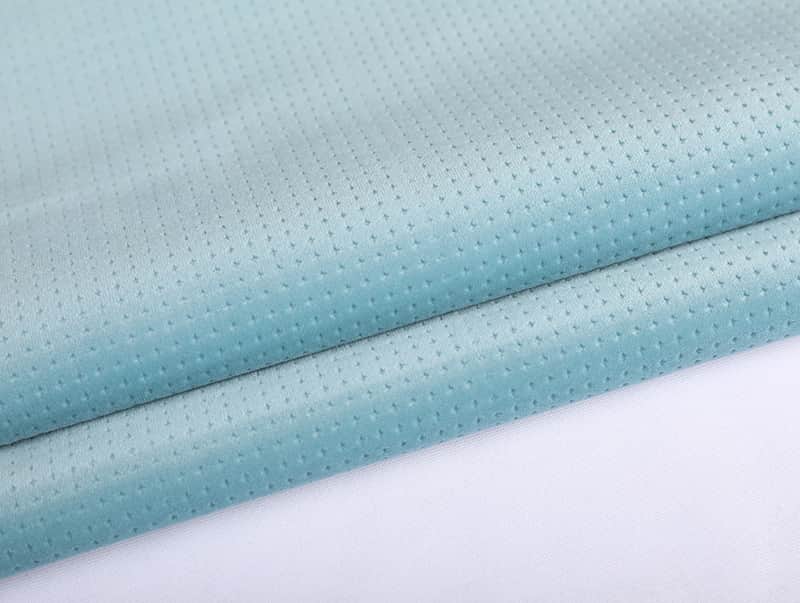
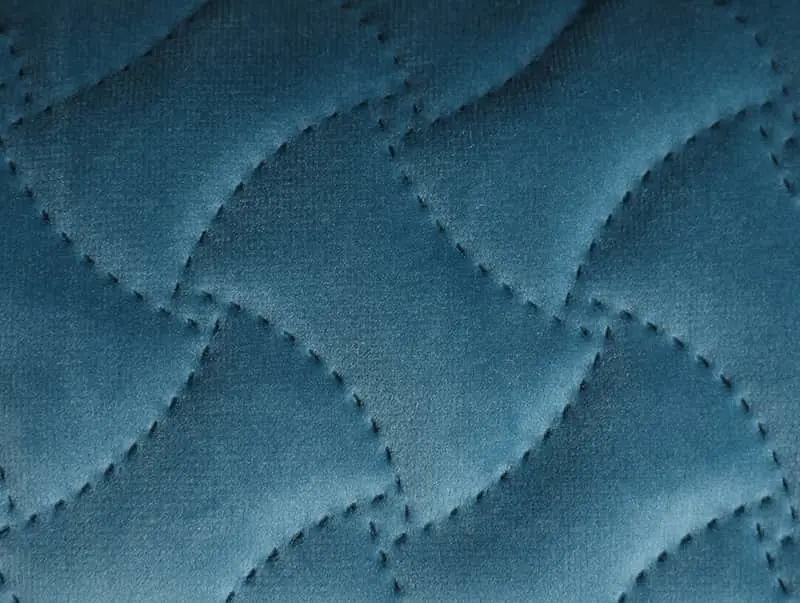
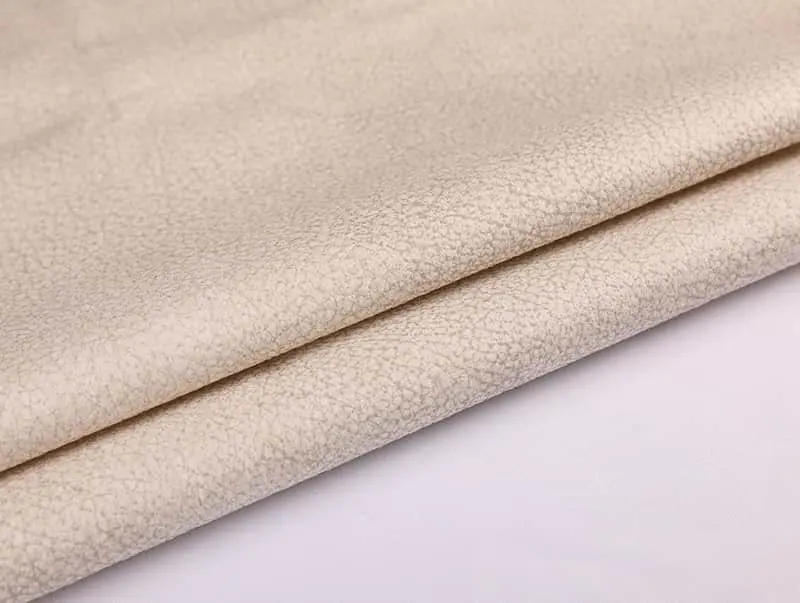
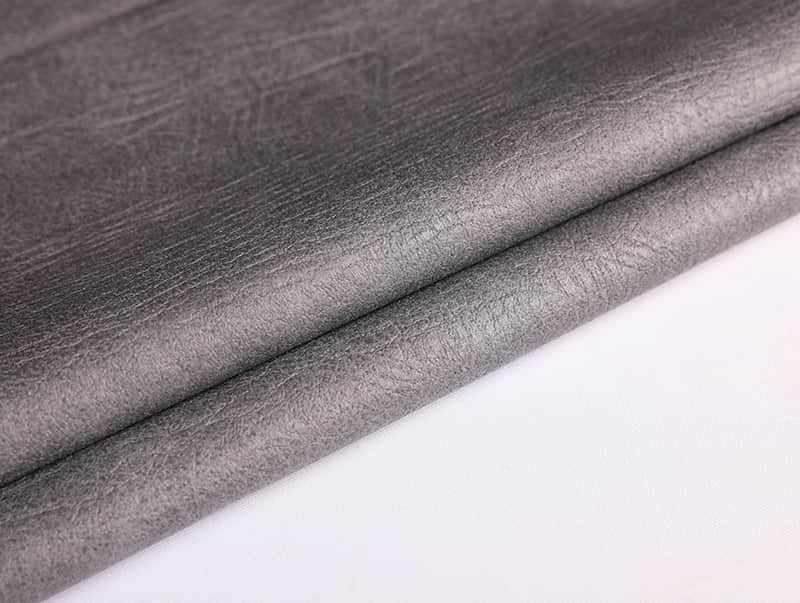
Embossing, foil stamping, anti-pilling treatment, and lamination transform printed velvet into premium furniture fabric. A factory that finishes in-house avoids the markup and lead time of an outside service. Confirm which treatments are available and request swatches showing the effect on a printed design.
5. Batch quality consistency
A Delta E tolerance under 1.0 from the approved standard is a widely used industrial benchmark for repeat orders. Ask for the test protocol, retained batch records, and a sample of the shade band if one is used. Large importers should also request a pre-shipment inspection report that includes roll-by-roll piece length, weight, and visual defect rating.
| Evaluation point | Why it matters | What to ask |
|---|---|---|
| Factory age and specialty | Accumulated warp-knit expertise prevents common production faults. | Years focused on velvet; proportion of digital printing orders in total output. |
| Equipment asset list | Machine footprint determines peak-season capacity and schedule reliability. | Total machine count, knitting gauge range, and annual square-meter/meter output. |
| Sample workflow | A documented process reduces alignment errors and confirm cycle. | Accepted file types, strike-off lead time, and number of included revisions. |
| Finishing options | In-house finishing shortens supply chain and lowers cost. | Embossing, foil stamping, laminating availability; minimum run per finish. |
| Color consistency | Deviation beyond tolerance leads to customer returns. | Delta E acceptance limit, retained batch records, shade band practice. |
Key Considerations for Wholesale Orders
After you shortlist a factory, the commercial terms will either protect your inventory investment or expose you to costly rework. Start with a written quality specification sheet that locks down color tolerance, fabric weight per square meter, pile height, and selvage condition. Without it, you have no objective reference if a shipment arrives different from the approved sample.
Always request a bulk fabric sample and a printed strike-off from the exact production base before confirming the purchase order. A sample printed on a different batch of greige or on a generic PFP fabric can behave differently during fixation and washing. The pre-production sample should be produced on the same knitting machine and printed using the same ink set as the bulk order.
Minimum order quantities for custom digital printing velvet typically start at 500 to 1,000 meters per design and color, but fully custom patterns may carry a slightly higher threshold depending on the number of colors and the engraving or screen preparation if any hybrid process is used. Clarify whether the MOQ applies per base color, per design, or as a combined total across several colorways.
Production lead time normally spans 15 to 25 working days after sample approval for standard quantities. Larger runs, special finishes, or peak season demand can push this to 30 days, so always build a buffer of at least one week. Packaging for export uses roll packaging with a polybag and outer carton, or palletized stretch-wrap for full container loads. Confirm that the factory ships on FOB Shanghai or Ningbo terms and can provide a verified container booking check prior to deadline.
Long-term buyers benefit from a dedicated account manager who tracks order progress, fabric consumption, and upcoming design changes. Regular video inspection calls and third-party pre-shipment inspections further reduce risk.
Applications of Digital Printing Velvet
Digital printing velvet covers far more than sofa upholstery, though that remains the largest single end-use. The fabric’s smooth pile surface and strong color payoff make it the first choice for several commercial and residential applications.
- Furniture fabric: Sofas, accent chairs, ottomans, and headboards use printed velvet for its tactile appeal and durability. A weight of 220–280 g/m² with a dense pile is standard.
- Curtains and drapery: Digital printing allows floor-to-ceiling pattern alignment across panels, something rotary screen printing cannot achieve economically for short runs.
- Cushions and throw pillows: Designers use digitally printed velvet to produce coordinated collections with low minimums, testing multiple colorways before committing to full container orders.
- Toys and pet beds: The soft pile and wash-resistant print make the fabric suitable for plush toys and padded pet beds that require frequent cleaning.
- PFP/PFD base fabrics for downstream printing: Importers who operate their own printing lines in regional markets buy prepared velvet greige to reduce logistics cost and apply designs locally.
Our range of sofa printing velvet, PFP/PFD warp-knitted bases, and finished fabrics with embossing or foil effects serves all five application areas. For specific construction details or a current catalogue, contact our export team directly.