 中文简体
 English
 Español
 عربى
Black and gray striped fabric has a quiet confidence about it. It doesn't shout for attention the way a bright red or mustard stripe might, but it holds a room together, gives a garment structure, and adds a sense of order without feeling rigid. Over the past two decades, we've watched this color pairing move from classic suiting and formal curtains into sofas, cushions, pet beds, and even automotive interiors. The stripes themselves can be crisp and graphic, or soft and almost painterly, depending on how they are made. In this guide, we'll walk through the practical side of choosing, specifying, and caring for black and gray striped fabric, with a few lessons we've picked up along the way.
Content
- 1 What Makes Black and Gray Striped Fabric So Versatile?
- 2 How Stripes Are Created in Woven and Knitted Fabrics
- 3 Choosing the Right Base Fabric for Your Project
- 4 Where Black and Gray Striped Fabric Works Best
- 5 Practical Tips for Working with Striped Velvet and Knits
- 6 Care and Maintenance
- 7 A Final Word on Color and Proportion
What Makes Black and Gray Striped Fabric So Versatile?
The first thing to understand is that "black and gray" is not a single look. A deep charcoal stripe on a pale silver ground feels completely different from a jet-black stripe on a warm taupe gray. The width of the stripe matters just as much. Narrow pinstripes read as tailored and precise, while wide bands feel more architectural. Because both colors are neutral, the fabric can sit comfortably in a minimalist interior, a traditional library, a modern hotel lobby, or a casual living room. It also gives product designers a reliable base for layering other colors and textures.
From a technical standpoint, stripes can be built into the fabric structure or applied on the surface. That choice affects durability, hand feel, and cost. A yarn-dyed stripe, for example, will usually outlast a printed stripe because the color goes all the way through the yarn rather than sitting on top of the cloth. On the other hand, printing gives you more freedom to experiment with gradient effects, irregular spacing, and fine detail. Neither is "better" in every case; it depends on where the fabric will live and how often it will be cleaned.
How Stripes Are Created in Woven and Knitted Fabrics
When a customer asks us for a black and gray striped fabric, the first question we ask is whether the stripe needs to be structural or decorative. That single decision narrows down the production route considerably.
Yarn-Dyed Stripes
In yarn-dyed stripes, the gray and black yarns are arranged in the warp or weft before the fabric is knitted or woven. The pattern is part of the cloth itself, so it won't crack, fade, or wash away. This method is especially good for upholstery, uniforms, and any application that will see repeated abrasion. It requires careful planning at the warping stage, because every yarn has to be positioned correctly, but the result is a clean, consistent stripe with a rich depth of color.
Printed Stripes
Printing is the more flexible route. A base fabric, often a PFP or PFD velvet or knit, is printed with black and gray stripes using digital or rotary methods. This allows for very fine lines, varied spacing, and even distressed or watercolor effects. Printed stripes are common in fashion, decorative cushions, and lightweight curtains. The key is to check colorfastness and to make sure the print is properly cured so it holds up to cleaning.
Jacquard and Embossed Stripes
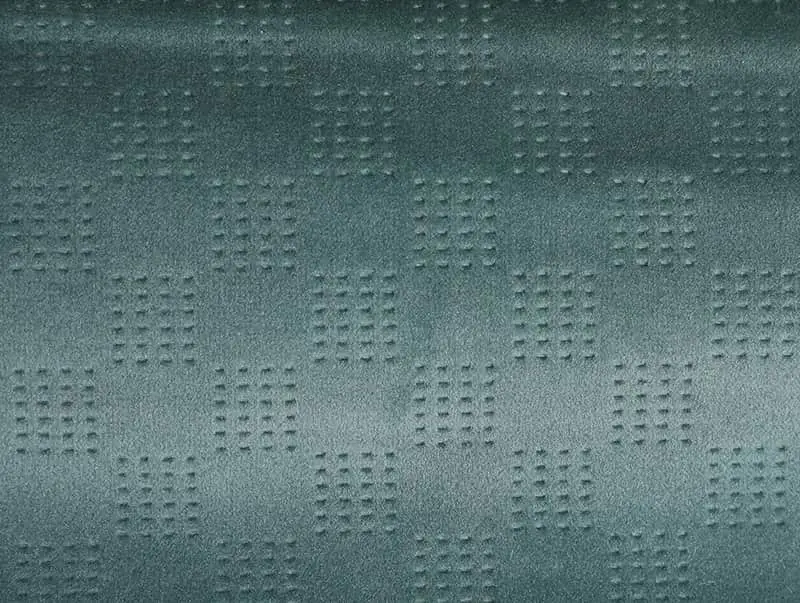
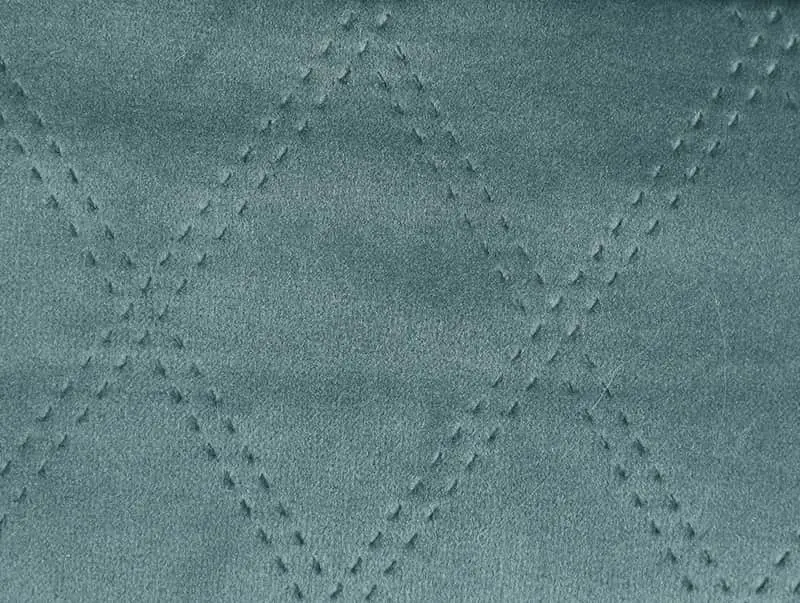
Sometimes the stripe isn't a different color at all. Jacquard weaving and embossing can create stripes through texture alone: a raised gray stripe against a flat black ground, or a change in pile height that catches the light differently. This approach is subtle and very durable because there is no added color to wear off. It works beautifully on velvet and plush fabrics, where the pile direction already changes the way light reflects.
 Laminated Jacquard Velvet Upholstery Fabric CX2316Jacquard velvet with lamination for sofa upholstery, offering woven texture and a durable, stain-resistant barrier in a 290 g/㎡, 145 cm construction.View Product →
If you are exploring jacquard stripes for upholstery, our laminated jacquard velvet is a good example of how texture and color can work together without a printed surface.
Choosing the Right Base Fabric for Your Project
The base fabric determines how the stripe behaves in real life. A stripe on a fluid polyester velvet will drape and shimmer, while the same stripe on a firm warp-knit jacquard will hold its shape and resist crushing. The table below compares the most common options we see in production.
| Base Fabric | Best For | Stripe Effect | What to Check |
|---|---|---|---|
| Polyester velvet | Sofas, cushions, curtains, pet beds | Soft, light-catching; pile direction changes the look of the stripe | Abrasion resistance, pile crush recovery, colorfastness to light |
| Warp-knit jacquard | Upholstery, automotive, structured bags | Texture-driven stripes; can be tone-on-tone or two-color | Dimensional stability, seam strength, backing adhesion |
| Printed PFP velvet | Decorative cushions, fashion, lightweight curtains | Fine detail, irregular spacing, gradient effects | Print cure, rubbing fastness, washability |
| Flat knit or jersey | Apparel, linings, craft projects | Clean, graphic stripes with a smooth hand | Stretch recovery, shrinkage, needle compatibility |
| Faux leather base fabric | Automotive interiors, bags, shoes | Embossed or coated stripes with a matte or gloss finish | Flex resistance, UV stability, adhesion of coating |
One practical note: if the fabric will be used on a large continuous surface, such as a sofa back or a long curtain panel, ask for a strike-off or sample length that shows at least three full repeats of the stripe. This helps you judge the scale in the actual lighting of the room. It also reveals whether the black and gray tones shift under warm or cool light.
 Printed and Embossed PFD Velvet Sofa FabricPolyester PFD velvet for sofa upholstery with printed and embossed surface detail, 250 g/m², 150 cm wide, and easy-care, fade-resistant properties.View Product →
For printed and embossed effects, this PFP velvet with print and emboss illustrates how a simple stripe can gain depth through surface texture.
Where Black and Gray Striped Fabric Works Best
Stripes are directional, and that direction has a real effect on how a space or a garment reads. Vertical stripes on a curtain panel make a ceiling feel higher. Horizontal stripes on a low sofa can make it feel wider and more grounded. On apparel, the same rule applies: a vertical stripe down the side of a trouser or jacket elongates the silhouette, while a horizontal chest stripe draws the eye across the shoulders. Beyond geometry, the black and gray palette is forgiving. It hides minor soiling better than pure white, and it pairs easily with wood, brass, chrome, and natural stone.
- Upholstery: accent chairs, sofa cushions, headboards, and ottomans. A medium-scale stripe on a velvet base adds movement without overwhelming the room.
- Curtains and drapery: vertical stripes in black and gray are a natural fit for modern living rooms, hotel suites, and home theaters. They add rhythm to a large window wall.
- Apparel: casual jackets, skirts, trousers, and knit tops. A soft gray-and-black stripe in a stretch velvet or jersey can be dressed up or down.
- Pet products: pet bed covers and plush toys benefit from a durable, easy-care striped velvet that hides fur and light wear.
- Automotive and contract interiors: headliners, seat inserts, and accent panels can use embossed or jacquard stripes for a tailored look that resists fading.
 Sunproof Black Yarn Mosha Velvet Curtain FabricBlack yarn Mosha velvet for curtains and sofa upholstery, 310 g/m² and 300 cm wide, suited to deep black-and-gray schemes with sun-protection positioning.View Product →
For curtain applications that lean toward deep black and gray tones, a sunproof velvet with black yarn can be a practical starting point.
Practical Tips for Working with Striped Velvet and Knits
Stripes are less forgiving than solid colors when it comes to cutting and sewing. A mismatch at the seam is immediately visible, especially on a large cushion or a curtain panel. We usually recommend ordering 10 to 15 percent extra yardage for pattern matching, particularly if the stripe repeat is wide. Cut all pieces in the same direction, and if the fabric has a pile, make sure every panel is oriented the same way before you sew. Velvet pile can make a black stripe look almost silver when brushed one way and deep charcoal the other. This is not a defect; it is the nature of the cloth. You can read more about how pile direction affects light reflection in our guide to curtain velvet and light.
Another consideration is seam placement. On upholstery, try to keep the most visible stripe lines away from tight curves and button tufting, where they can distort. On curtains, plan the panel width so the stripe falls evenly at the leading edge. If you are working with a very narrow stripe, test a small sample on camera before committing to a large order; fine stripes can produce a moiré effect on video calls and television screens. For a deeper look at how single-sided and double-sided striped velvets differ, our comparison of single-sided and double-sided striped velvet is a useful reference.
Care and Maintenance
Black and gray stripes are relatively low-maintenance, but the base fabric still sets the rules. Velvet should be vacuumed with a soft brush attachment rather than scrubbed. For spills, blot gently with a clean, dry cloth and avoid soaking the pile. Printed stripes should be cleaned according to the print's fastness rating; a gentle cold wash inside out is usually safer than hot water or harsh detergent. Curtains can often be professionally cleaned or washed on a delicate cycle, but always check the care label first. If the fabric has a laminated backing, avoid high heat, which can soften the adhesive. With a little care, a good quality striped velvet will keep its definition for years.
A Final Word on Color and Proportion
One of the pleasures of black and gray striped fabric is how much it changes with proportion. A 2 mm pinstripe on a gray ground feels like a tailored suit; a 5 cm band feels like a modern architectural detail. Before you settle on a width, look at the fabric from the distance it will be viewed. A stripe that looks bold in a sample book may read as a solid from across a room. And a stripe that seems subtle up close may create a strong graphic rhythm on a large sofa. If you are unsure, ask for a large sample and live with it for a few days in the actual space.
At Chuangxing, we have been designing and producing warp-knitted fabrics since 2002, and striped effects are one of the many patterns our customers ask us to develop. Whether you need a yarn-dyed stripe for contract upholstery, a printed stripe on PFP velvet for cushions, or an embossed stripe for automotive trim, the starting point is always the same: a clear idea of where the fabric will be used and how it will be cleaned. If you are exploring a black and gray striped fabric for your next project, we are happy to share samples and talk through the options.