 中文简体
 English
 Español
 عربى
Cats and upholstery have been at odds for as long as the two have shared a living room. After more than twenty years of weaving sofa fabric, we can say the truth is simpler than most buying guides suggest: no cloth is truly bite-proof or claw-proof, but there is an enormous gap between a sofa that looks shredded within six months and one that still looks presentable after five years of daily kneading.
This guide walks through what actually makes a cat proof fabric for sofa use, which constructions hold up, which ones fail quickly, and how to test a swatch on your own cat before you commit an entire room to it.
Content
Why Cats Damage Some Sofas and Barely Touch Others
A cat's claw is a curved hook. When it drags across a fabric, the result depends less on how sharp the claw is than on how tightly the yarn is locked into the cloth. If the claw catches a loose loop, the animal pulls to free itself and the yarn is drawn out. That is a snag, and one snag can become a run. If the claw skids across a dense, flat surface, nothing catches and nothing breaks.
It also helps to remember why the sofa is a target in the first place. Scratching is stretching, scent marking and nail maintenance in one motion, and the arm of a sofa offers a satisfying vertical surface at exactly the right height. That is why we tell furniture makers, half jokingly, that fabric and scratching post are a matched pair. Pick a forgiving fabric, then put a post next to the sofa arm and the sofa stops being the training ground.
In practice, upholstery fails in three ways:
- Snagging: a claw lifts a yarn loop and the surface never lies flat again.
- Fuzzing and pilling: surface fibers break and mat into little knots where claws repeatedly catch.
- Tearing and puncturing: thin or loosely backed cloth gives way under a determined pull or a landing cat.
What Actually Makes a Fabric Cat Proof
Three properties do most of the work. Get them right and the cat can still enjoy the sofa without destroying it.
Density and stitch tightness
A tightly knitted or woven structure leaves no gap for a claw to enter. Warp-knitted fabrics, which is what we produce, can be built at high stitch density, so the pile sits on a firm foundation rather than a loose one. Hold a swatch up to a window: if light passes through freely, the structure is open and a claw will find it.
Short pile, firmly anchored
Pile length is the single most misunderstood factor. Long furs, chunky bouclé and looped chenille look wonderful in photographs and behave like velcro under a claw. A pile of two or three millimeters, brushed and then anchored into a dense ground structure, gives comfort underfoot and under paw while denying the claw a handle to grab.
Backing and dimensional stability
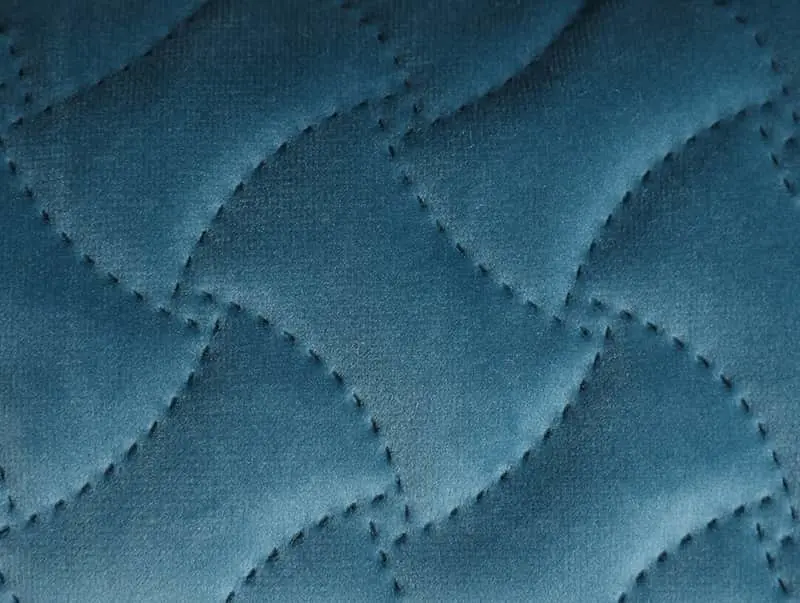
A sofa cover stretches every time someone sits down, and stretched fabric is easier to pierce. Laminating a knitted velvet to a TC fleece or a knit backing with ultrasonic bonding keeps the face stable, holds the pile upright and spreads pressure. It is a quiet detail that never appears in a fabric name, yet it makes more difference to a cat household than almost anything else.
You can browse the constructions we produce for sofa velvet upholstery fabric to see how pile height and backing are usually combined.
Comparing Common Sofa Fabrics for Cat Households
The table below summarizes how the most common choices tend to behave when a cat shares the couch. It is a general guide, not a guarantee, because one cat's habits vary enormously from the next.
| Fabric type | Surface texture | Snag risk | What it means at home |
|---|---|---|---|
| Short-pile knitted velvet | Dense, directionally brushed pile | Low | Claws tend to slide; light marks brush out by hand |
| Microfiber | Tight, matte, no loops | Low | Widely recommended by cat owners for good reason |
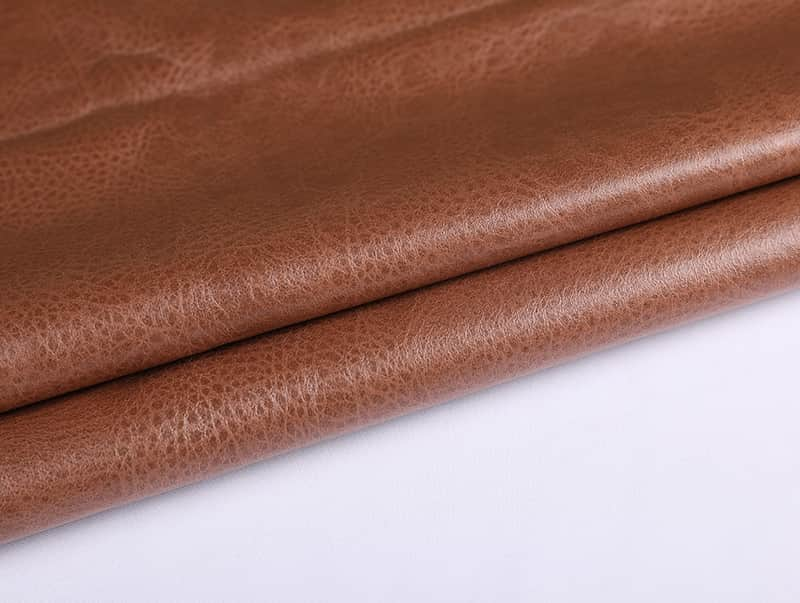
| Faux leather and laminated fabric | Smooth, non-porous | Low to medium | Resists snagging, but can be punctured; check thickness |
| Flat tight weave (twill, canvas) | Smooth, firm | Low to medium | Durable, though coarser weaves can still catch |
| Chenille | Soft, looped pile | High | Comfortable but prone to runs once a loop is pulled |
| Bouclé and chunky knit | Open, textured loops | Very high | Beautiful, but a scratch post in fabric form |
| Linen and loose weave | Open, slubby yarn | High | Claws catch easily; also stretches with use |
Where Velvet Fits In
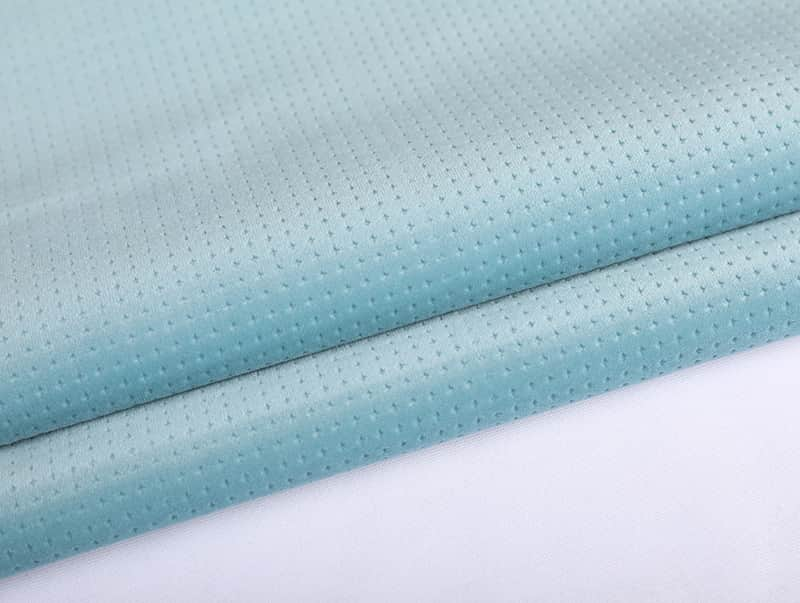
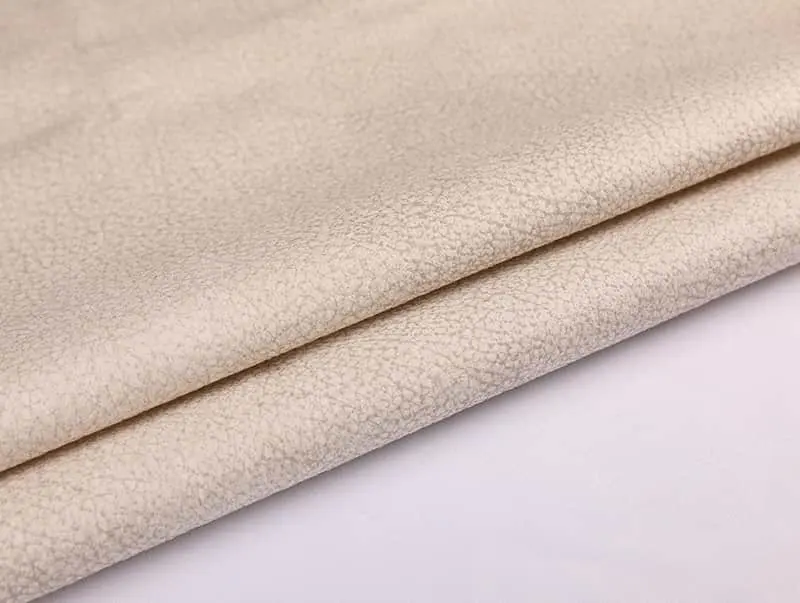
Velvet has a reputation for delicacy that is mostly undeserved. Crushed, foiled and long-pile versions can indeed look tired quickly in a busy household, but a close-cropped polyester velvet on a dense knit ground behaves very differently. The pile is short enough that claws do not hook, and the fabric recovers its direction with a single stroke of the hand. Brushing against the grain darkens the color, which is why velvet shows handling marks; the same quality means a claw mark can often be brushed away.
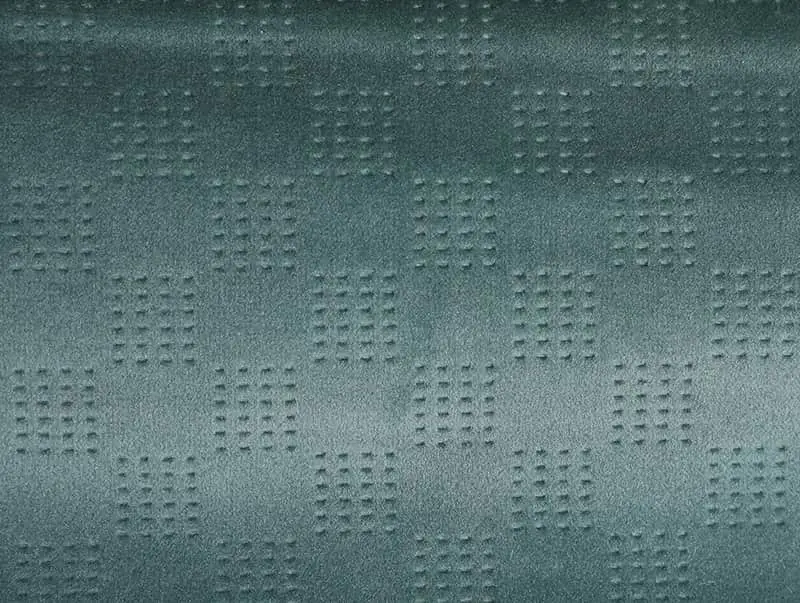
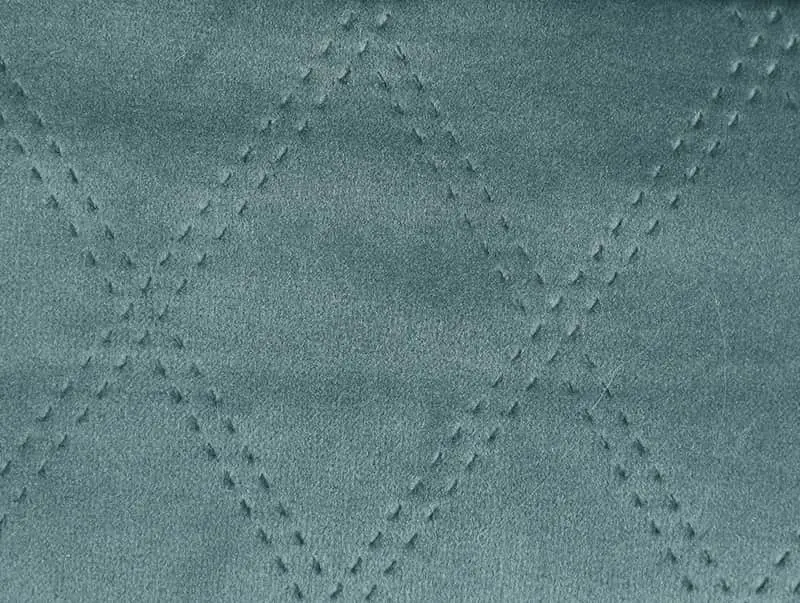
For homes with one calm cat, a short-pile velvet is one of the most comfortable compromises available. For a young cat that treats furniture as a climbing frame, choose a denser variant with a laminated backing, such as our
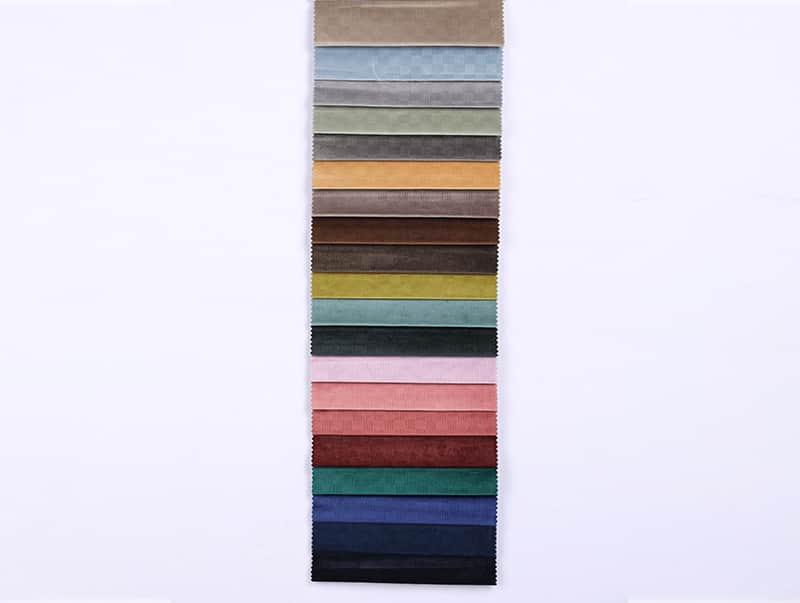 Supersonic Laminated Polyester Velvet Upholstery FabricLaminated velvet with a supersonic emboss and firmer hand, available in shorter-pile Holland Velvet or longer-pile French Velvet for sofa upholstery.View Product →
. The added backing gives the face a firmer hand, so a claw meets resistance instead of sinking in.
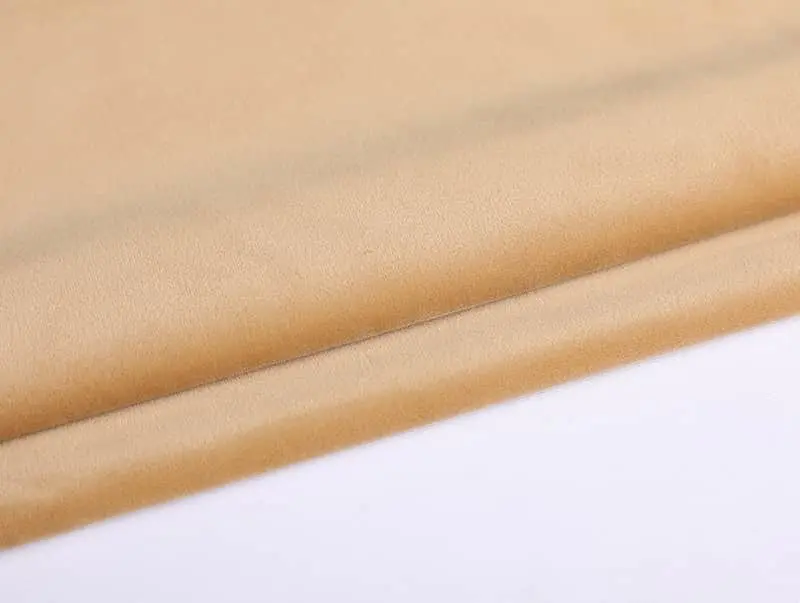
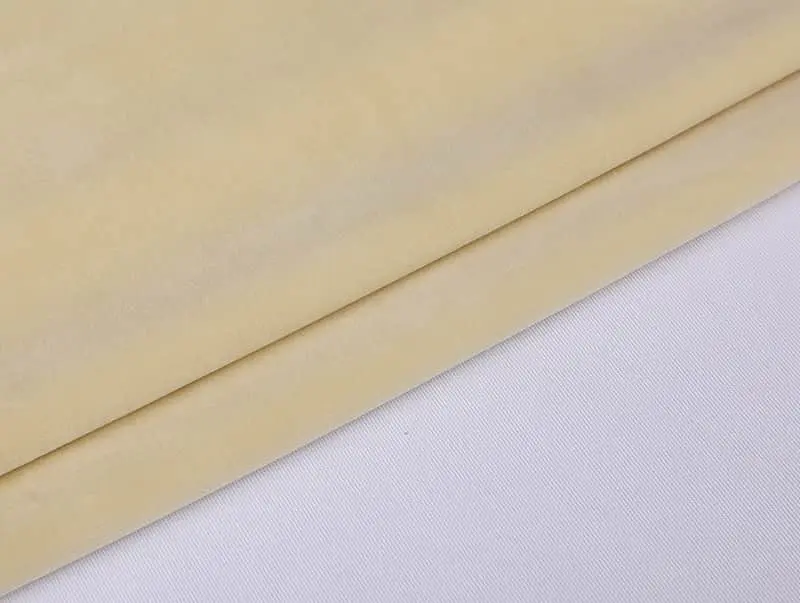
If you prefer a matte look with a dull polish rather than a sheen, this
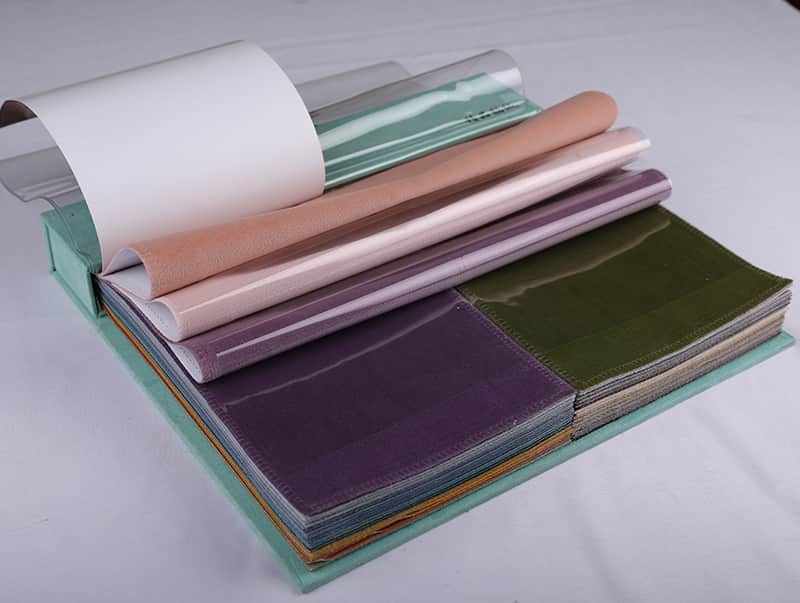 Dull Polished Polyester Velvet Sofa Upholstery FabricMatte dull-polished mink velvet for sofas, with dense short pile, strong color fastness and polyester fibers that offer some UV resistance.View Product →
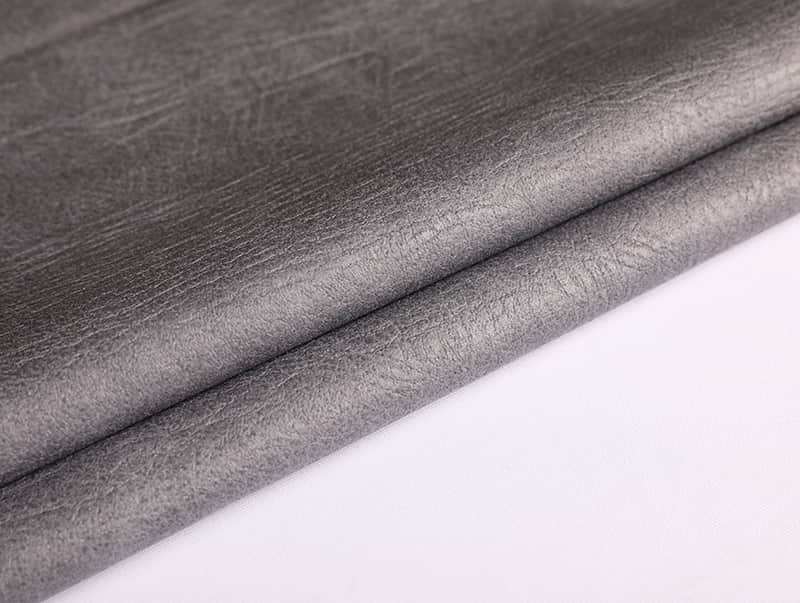
is a good starting point — dense, short-pile and easy to keep tidy. If you want a completely different surface with no pile at all, a laminated faux leather is worth considering, and this
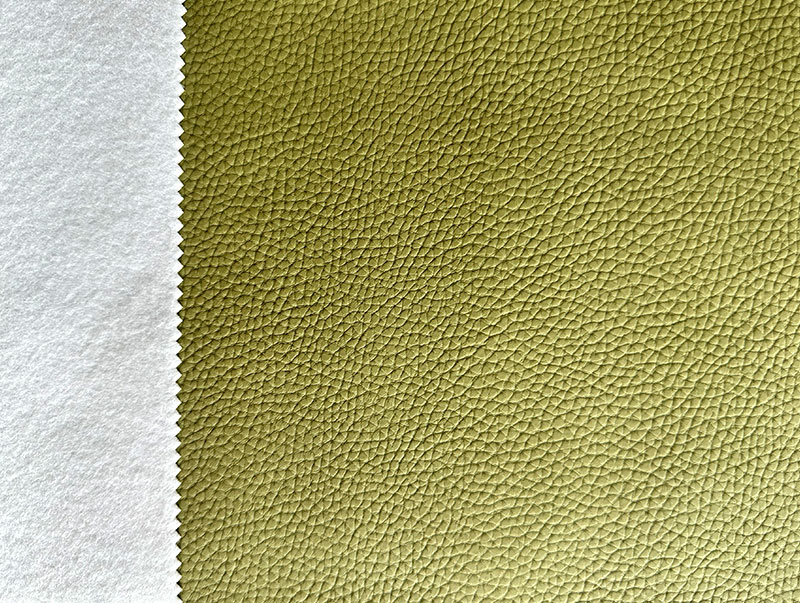 Artificial Leather CX2317 Sofa Upholstery FabricA smooth artificial leather option for sofas, chairs and other upholstered furniture, presented within the supplier’s faux leather upholstery range.View Product →
shows how a smooth face can be paired with a stable backing.
Whichever direction you lean, it is worth reading up on how to choose velvet for sofa upholstery before you compare swatches side by side.
How We Approach Cat-Friendly Sofa Velvet
Because we knit rather than weave from scratch, we can control density at the yarn level. On the machines, we adjust stitch count, pile height and yarn type to reach the balance a furniture maker needs: a surface that feels generous but does not offer a claw a loose end. Several practical details recur in our cat-conscious developments.
- Short, compact pile, usually brushed and then set so the fibers stand up rather than tangle.
- High stitch density, so the ground structure closes the gaps a claw would otherwise find.
- Lamination or ultrasonic bonding with TC fleece and knit backings, which keeps the face taut after years of sitting.
- Finishing for abrasion and pilling resistance, because fuzzing is what makes a velvet look shabby long before it wears through.
We also run a simple internal check that any cat owner would recognize: a coin and a fingernail dragged firmly across a finished sample. If either leaves a permanent track, the construction goes back for adjustment. None of this makes a fabric invincible, and we would be uneasy claiming otherwise. It does mean the fabric loses far less of itself to everyday claws.
Five Tests to Run on a Swatch Before You Buy
Testing costs nothing and prevents expensive disappointment. Ask for a sample large enough to work with, roughly A4 size, then try the following.
- Drag a fingernail firmly across the surface from several angles. A snag that stays proud of the surface is a warning sign.
- Run a coin edge back and forth ten times in one spot. Fuzzing and pilling appear quickly on weaker constructions.
- Stretch the swatch across the grain and look for daylight. Gaps mean the fabric will pierce easily when upholstered.
- Scratch it lightly with a key. Faux leather that punctures at low pressure will not survive a cat landing on a sofa arm.
- Give the swatch to your cat. Fix it to a post for a week and watch what she does. If it survives her routine, buy the sofa.
Living With a Fabric Sofa and a Cat
The fabric choice is only half of the story. A few habits keep upholstery looking its best for years.
- Vacuum weekly with a soft upholstery head to lift loose fibers before they mat.
- Trim a snag with small scissors instead of pulling it, then smooth the pile with a damp cloth and a light brush.
- Rotate and flip cushions so wear and pile direction stay even.
- Keep at least one scratching post near the sofa arm, and reward the cat for using it.
- Clean spills by blotting rather than rubbing, which disturbs the pile.
A cat proof fabric for sofa use does not need to be utilitarian. The right short-pile velvet, knitted densely and bonded to a sound backing, gives you the softness people associate with a comfortable living room and enough resilience to survive daily claws. Choose a swatch thoughtfully, test it honestly, and treat the scratching post as part of the furniture plan rather than an afterthought. Your sofa will look better for it, and your cat will barely notice the difference.