 中文简体
中文简体
 English
 Español
 عربى
عربى
Choosing a white upholstery fabric usually starts with the same question from every buyer: "It looks beautiful, but how long will it stay white?" That concern is fair, but it is not a reason to avoid white. White upholstery fabric handles daily use well when the fiber, construction, and protective finish are specified correctly. At our warp-knitting mill, we have produced millions of meters of bright and off-white velvet upholstery for markets across North America, the Middle East, and Southeast Asia. The lesson from those years is consistent: white fabric performs when it is engineered to perform, not when it is chosen on looks alone.
Content
- 1 Why White Upholstery Fabric Stays in Demand
- 2 Key Factors That Decide Whether White Upholstery Fabric Will Perform
- 3 White Upholstery Fabric Options by Type
- 4 Stain Resistance and Everyday Maintenance
- 5 Technical Specifications to Verify Before You Commit
- 6 How to Source White Upholstery Fabric Like a Professional
Why White Upholstery Fabric Stays in Demand
The commercial case for white upholstery is straightforward. White reflects light, which makes compact living rooms feel larger. It accepts whatever palette the designer brings to it, eliminating the conflict that strongly colored or patterned fabrics can introduce. It also carries a clear psychological signal: a white sofa reads as calm, deliberate, and well cared for.
That reputation is why white fabric has moved beyond formal living rooms and model homes. Hotels use white upholstery in guest rooms and lobbies because it projects cleanliness. Restaurants and cafés choose it when they want an open, airy atmosphere. Residential buyers increasingly ask for white sofas, headboards, and even pet-friendly furniture. The common thread is that the successful installations all started with the right technical specification, not with the color alone.
Key Factors That Decide Whether White Upholstery Fabric Will Perform
Three variables determine whether a white upholstery fabric will survive real use: fiber content, construction, and finishing. A buyer who evaluates all three before ordering rarely gets burned.
Fiber Content
Polyester is the most practical fiber for white upholstery. It releases oily stains more readily than cotton or rayon, resists abrasion, holds color well, and does not absorb moisture as aggressively as natural fibers. Cotton offers a softer, more natural hand feel, but it soaks up spills and requires heavier finishing to reach the same level of stain resistance. Polyester blends can split the difference, although the finishing chemistry must be adjusted to the blend ratio.
Fabric Construction
Warp-knitted velvets are a strong fit for white upholstery because the knit structure produces a dense, stable pile. Density matters for two reasons: it gives the surface a more even light reflection, and it leaves less space for liquids to penetrate before you can blot them. Flat-woven white fabrics are simpler to wipe clean, but they tend to show wear and seam distortion faster than a compact pile fabric.
Protective Finishes
A protective finish is what turns a beautiful white fabric into a practical one. Water- and oil-repellent finishes make liquids bead on the surface, giving you time to blot. Anti-static and anti-dust treatments reduce the dust attracted to the pile, which keeps a white sofa presentable for longer. These finishes are not a guarantee against stains, but they consistently make the difference between a stain that lifts out and one that sets permanently.
To compare the most common choices at a glance:
| Fiber / Construction | Stain Release | Durability | Ease of Cleaning | Best Use |
|---|---|---|---|---|
| Polyester warp-knitted velvet | High | High | Moderate | Sofas, chairs, pet-friendly furniture |
| Cotton flat weave | Low | Moderate | High | Light-use decor, occasional chairs |
| Polyester-cotton blend | Moderate | Moderate | Moderate | Cost-conscious projects |
| Faux leather / coated fabric | Very high | Moderate | Very high | Dining chairs, contract seating |
Within the same fiber type, construction quality still decides real-world performance. A tightly knitted polyester pile with a finished backing will outlast a loosely woven lookalike. For practical guidance on sofa applications, see our guide to choosing the best velvet for sofa upholstery, which compares pile heights and backing options in detail.
White Upholstery Fabric Options by Type
Once the technical baseline is set, the next decision is the surface type. White upholstery fabric is available in a range of textures, and the right choice depends on where the furniture will sit.
Plain Velvet
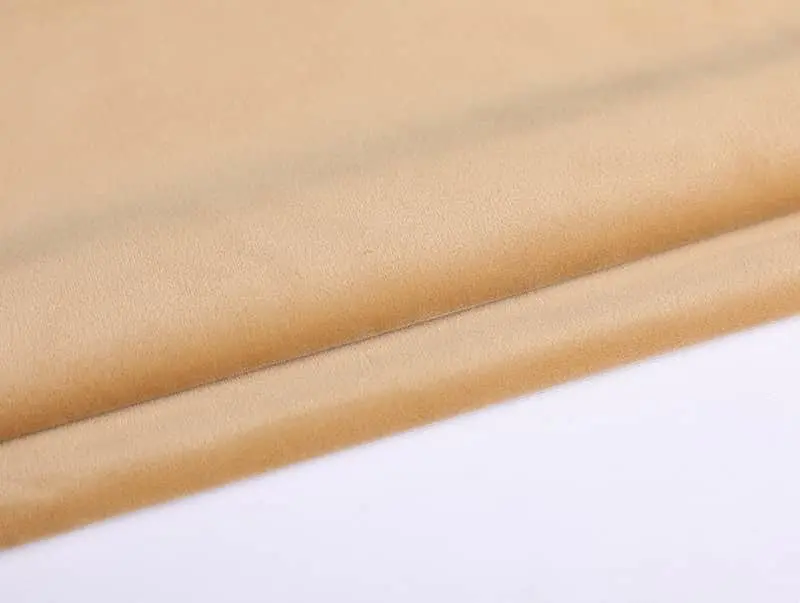
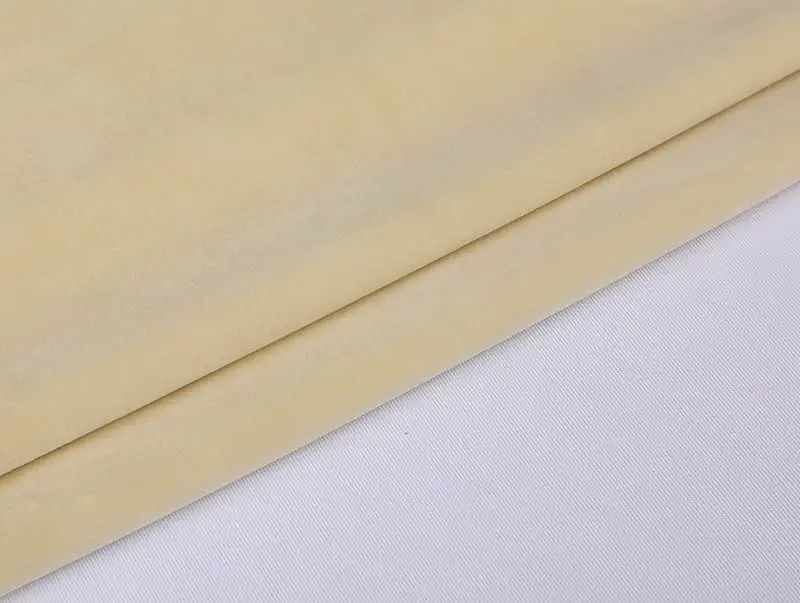
Plain white velvet is the classic choice for elegant sofas and accent chairs. Its short, dense pile reflects light with a soft sheen and invites touch. Choose a polyester plain velvet with a stable backing if the piece will see daily seating, and keep a vacuum brush attachment nearby for weekly care.
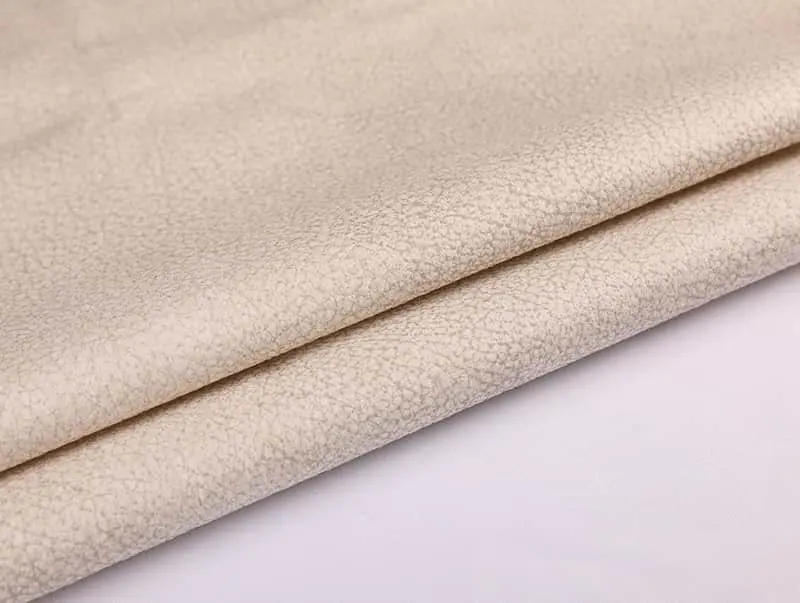
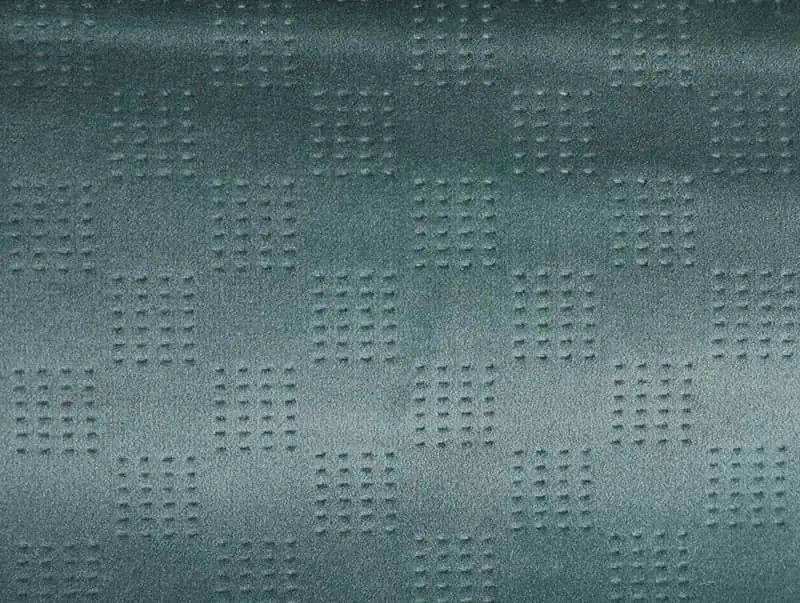
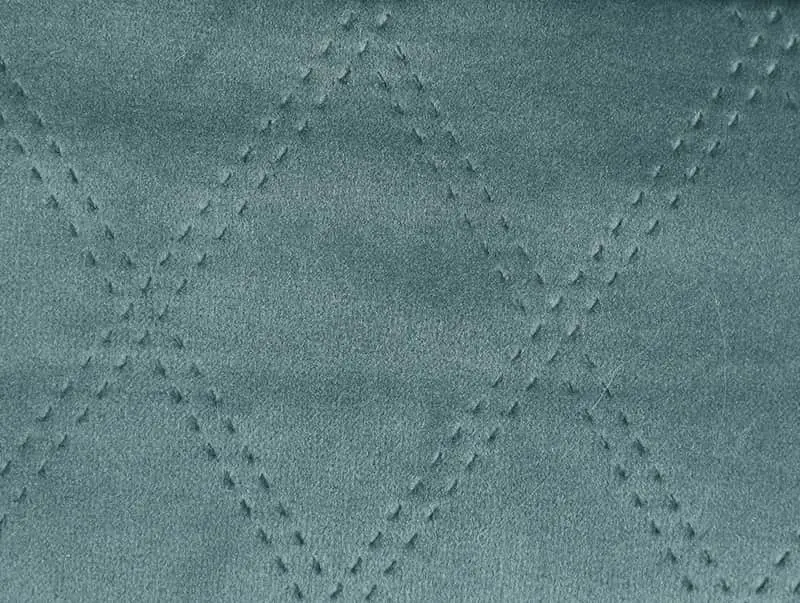
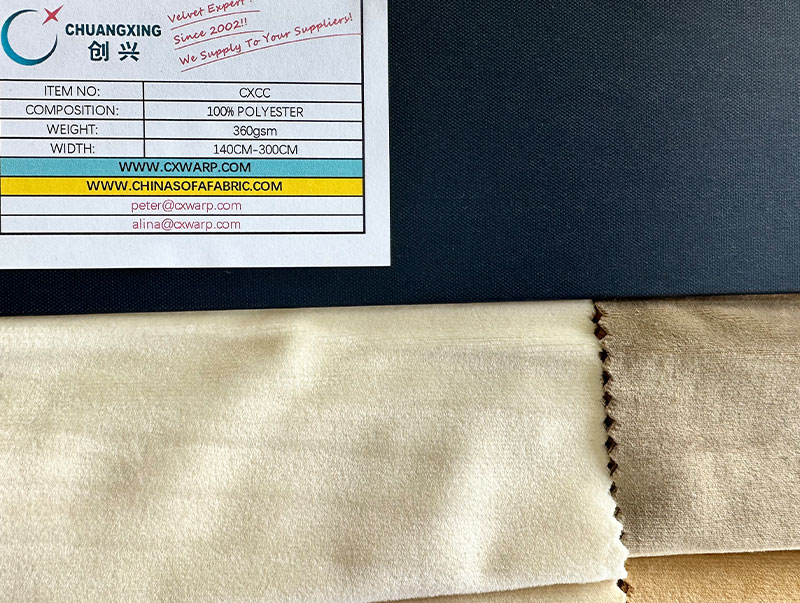 CXCC-360 Embossed Baby Face Velvet for UpholsteryThis crushed and embossed white velvet adds subtle texture, breaking up light to make dust and creases less visible. Ideal for busy households seeking practical elegance.View Product →
Crushed and Embossed Velvet
Crushed and embossed velvets add texture to white without adding color. The varied surface breaks up light, making small dust particles and minor creases far less noticeable. That is a practical advantage in homes with children or pets.
Printed and Jacquard Velvet
White does not have to be solid. A white base with a subtle jacquard pattern or a light printed motif delivers the brightness of white while adding visual depth. This route works well when the sofa or headboard is the focal point of the room.
Faux Leather Upholstery
For dining rooms, offices, and public seating, white faux leather offers a wipe-clean surface that pile fabrics cannot match. Modern polyester versions have a soft, leather-like hand feel without the cracking or peeling problems associated with lower-grade coated materials.
Stain Resistance and Everyday Maintenance
Let us be direct: no white upholstery fabric is stain-proof. What the right fabric and finish can deliver is stain resistance, meaning a spill stays on the surface long enough for you to deal with it. That distinction matters more than any marketing claim.
| Scenario | Recommended Action | Expected Result |
|---|---|---|
| Wine or juice spill | Blot immediately with a dry cloth; apply mild upholstery cleaner | No visible mark on treated fabric |
| Grease or oil from food | Blot, then sprinkle absorbent powder; use diluted dish soap | Mostly removable when caught early |
| Dust and daily dirt | Vacuum weekly with a soft brush attachment | Surface stays bright between deep cleans |
| Writing ink | Dab with rubbing alcohol on a cotton swab; work outward | Partial to full removal on treated polyester |
Three habits protect white upholstery more than any product. Vacuum weekly to remove abrasive dust, respond to spills within the first minute, and never rub the pile when cleaning. Rubbing pushes the liquid deeper and flattens the velvet fibers permanently. For the complete routine, see our guide to cleaning and maintaining sofa velvet upholstery.
Technical Specifications to Verify Before You Commit
Performance data separates professional upholstery fabric from decorative cloth. Before committing to a white fabric, ask the supplier for these numbers.
Abrasion resistance is usually reported as Martindale rubs. Residential seating should not start below 20,000 rubs, and a furniture line intended for hotels, offices, or waiting areas should target 40,000 rubs or more. The color of the fabric does not change this requirement; white fabric must pass the same test as any other shade.
Lightfastness is the second number worth checking. White fabrics are judged not only by fading but by yellowing. A lightfastness rating of 4 or higher on the blue wool scale keeps a white sofa from turning warm or gray under ordinary window light. In rooms with direct sun, this specification becomes critical.
Dimensional stability is the third. Warp-knitted polyester velvets hold their shape far better than loose weaves, and a bonded or TC backing adds another layer of security so the fabric does not stretch during upholstery or creep on deep cushions.
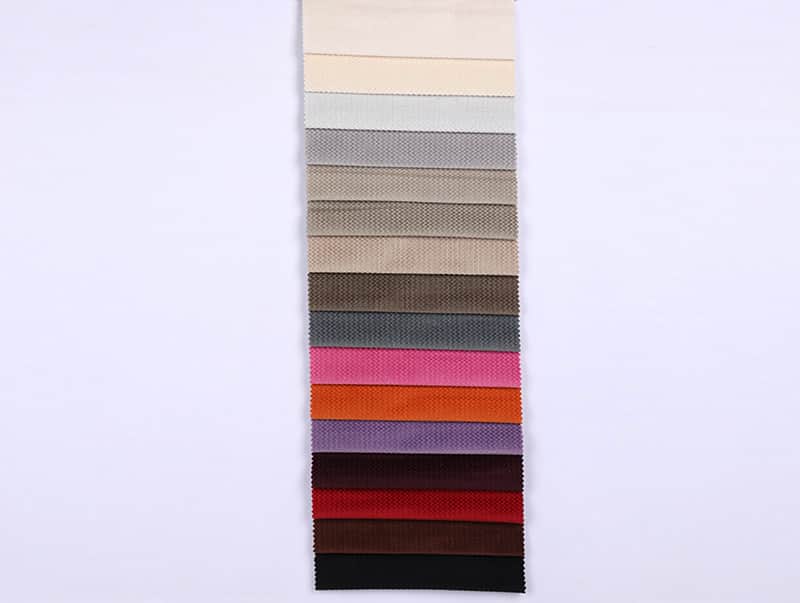 CX028 Laminated Double Color Velvet with TC BackingA warp-knitted polyester velvet with a bonded TC backing offers strong dimensional stability, preventing stretch and creep. Useful for daily-use seating where durability matters.View Product →
How to Source White Upholstery Fabric Like a Professional
The most reliable way to source white upholstery fabric is to treat it as an engineering conversation, not a color conversation. Tell the supplier where the furniture will be used, how many people will sit on it each day, and what cleaning products the end user is likely to reach for. That context changes the recommendation.
Ask for test data before requesting samples. A mill that cannot provide abrasion, lightfastness, and pilling results for its own production is not a safe partner for a white fabric program. White fabric also demands disciplined shade control across dye lots. A reputable manufacturer keeps shade archives and tracks batch numbers so that a repeat order matches the original within acceptable tolerance.
For custom printing or private-label work, a prepared-for-print white base fabric is the efficient starting point. It skips one full production step and gives furniture makers a clean canvas for digital printing or dyeing.
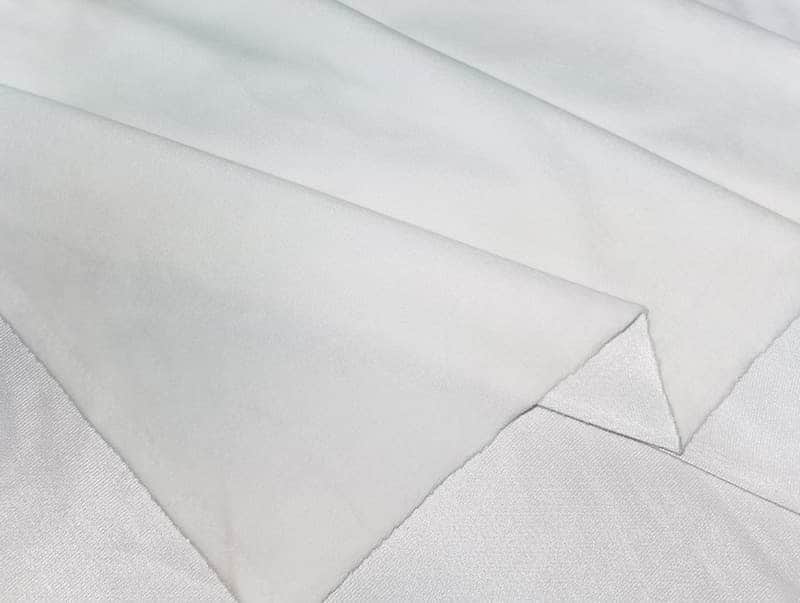 White Knit PFP/PFD Fabric for Digital PrintingThis prepared-for-print white knit fabric streamlines custom printing and dyeing by skipping a production step. A wide width option supports efficient private-label work.View Product →
Finally, request physical swatches and review them in the room where the furniture will live. Daylight, warm LED light, and cool fluorescent light all change how white appears. A shade that looks chalky in a showroom can look crisp in a living room, or the opposite. Compare several whites side by side and keep the winner on file as your reference standard.
White upholstery fabric does not have to be a decorative risk. It is a material decision, and like every material decision, it depends on specification. Choose a dense polyester pile or a wipe-clean coated surface, confirm the abrasion and lightfastness data, apply a protective finish, and set a simple cleaning routine. When those boxes are checked, white upholstery stops being the fabric you admire in photos and becomes the fabric you can live with comfortably, every day.