 中文简体
中文简体
 English
 Español
 عربى
عربى
Content
- 1 What Is Car Artificial Leather Base Fabric?
- 2 The Layered Structure of Automotive Artificial Leather
- 3 Fiber Types Used in Automotive Base Fabrics
- 4 Fabric Construction Methods and Their Effect on Performance
- 5 Key Composition Parameters and Their Automotive Performance Implications
- 6 The Role of Foam Backing in the Base Fabric Assembly
- 7 Automotive Industry Requirements That Shape Base Fabric Specification
What Is Car Artificial Leather Base Fabric?
Car artificial leather base fabric is the foundational textile substrate onto which polyurethane (PU) or polyvinyl chloride (PVC) coatings are applied to create the synthetic leather used throughout vehicle interiors. It is not a single material but a precisely engineered composite structure whose composition determines the mechanical strength, dimensional stability, tactile feel, breathability, and long-term durability of the finished automotive upholstery. Seat covers, door panels, steering wheel wraps, headrests, center consoles, and dashboard surfaces that carry a leather-like appearance all depend on the base fabric for their structural integrity and performance in service.
The term "base fabric" in this context refers specifically to the textile layer that serves as the backbone of the synthetic leather laminate — it is the component that gives the composite its tensile strength, tear resistance, and dimensional stability under the thermal cycling, mechanical stress, and UV exposure that automotive interior materials experience throughout a vehicle's service life. Understanding the composition of this base fabric layer is therefore essential for materials engineers, automotive interior designers, and procurement specialists who need to specify, evaluate, or source synthetic leather for vehicle applications.
The Layered Structure of Automotive Artificial Leather
Before examining the base fabric in isolation, it is useful to understand how it fits within the complete cross-sectional structure of automotive artificial leather. The finished material is always a multi-layer composite, and the base fabric is one — albeit the most structurally critical — of those layers. A typical automotive artificial leather structure from bottom to top consists of the following layers:
- Base fabric (substrate layer): the primary textile reinforcement that provides tensile strength, dimensional stability, and a consistent surface for adhesion of upper layers
- Foam layer (optional but common): a polyurethane or polyethylene foam layer laminated between the base fabric and the coating, providing cushioning, thermal insulation, and a softer hand feel
- Adhesive or tie layer: a chemical bonding layer that secures the foam or coating to the base fabric surface
- PU or PVC resin coating: the main surface coating that creates the leather-like appearance, color, and surface texture
- Surface treatment or topcoat: a clear or pigmented topcoat that provides abrasion resistance, UV stability, stain resistance, and the desired surface gloss or matte finish
The base fabric must be compatible with all layers above it in terms of surface energy, thermal stability during lamination, and dimensional behavior under processing conditions. Its composition is therefore selected not only for its intrinsic mechanical properties but also for its processability within the specific manufacturing route used by the artificial leather converter.
Fiber Types Used in Automotive Base Fabrics
The choice of fiber type is the most fundamental compositional decision in the design of a car artificial leather base fabric. Different fibers offer distinct property profiles, and the selection is driven by the performance requirements of the specific interior application, the processing route, and cost constraints.
Polyester (PET) Fibers
Polyester is by far the most widely used fiber in automotive artificial leather base fabrics, accounting for the majority of global production volume. Its dominance is attributable to an outstanding combination of properties that align closely with automotive interior performance requirements. Polyester fibers offer high tensile strength and excellent resistance to elongation under sustained load, which is critical for seat cover applications where the fabric must resist stretching and bagging over years of repeated sitting and rising movements. Polyester also has excellent resistance to hydrolysis — the chemical degradation caused by moisture — which is important in vehicles where occupants bring in wet clothing, spilled drinks, or humidity from outdoor environments.
Additionally, polyester fibers are thermally stable up to approximately 150°C to 170°C, which allows the base fabric to withstand the elevated temperatures used in lamination and embossing processes without fiber degradation or dimensional distortion. Polyester's relatively low moisture absorption (less than 0.4% by weight) contributes to the dimensional stability of the base fabric during and after these thermal processing steps. From a cost perspective, polyester is one of the most economical synthetic fiber options, making it the default choice for volume automotive applications where both performance and cost efficiency are required simultaneously.
Nylon (Polyamide) Fibers
Nylon fibers — primarily nylon 6 and nylon 6,6 — are used in automotive base fabrics where superior abrasion resistance and fatigue performance under dynamic loading are the primary requirements. Nylon has significantly higher abrasion resistance than polyester and better recovery from repeated flexing and compression cycles, which makes it the preferred choice for high-wear applications such as seat bolster areas, armrests, and door pulls that experience concentrated mechanical stress. The trade-off compared to polyester is higher cost and greater moisture absorption (approximately 2.5% to 4.5% by weight for nylon 6), which can cause dimensional changes in humid environments and requires careful process control during lamination to prevent steam generation that could disrupt the coating bond.
Blended and Specialty Fibers
Some base fabrics use blended yarn systems that combine polyester and nylon fibers in defined ratios to achieve intermediate property profiles — higher abrasion resistance than pure polyester at lower cost than pure nylon, for example. Recycled polyester (rPET) derived from post-consumer plastic bottles is increasingly used in automotive base fabrics as vehicle manufacturers pursue sustainability targets for interior materials. Bicomponent fibers — fibers with two polymer components in a core-sheath or side-by-side arrangement — are used in some microfiber base fabrics where a sea-island structure allows the outer component to be dissolved after fabric formation, leaving an extremely fine fiber matrix that mimics the fibril structure of natural leather suede.
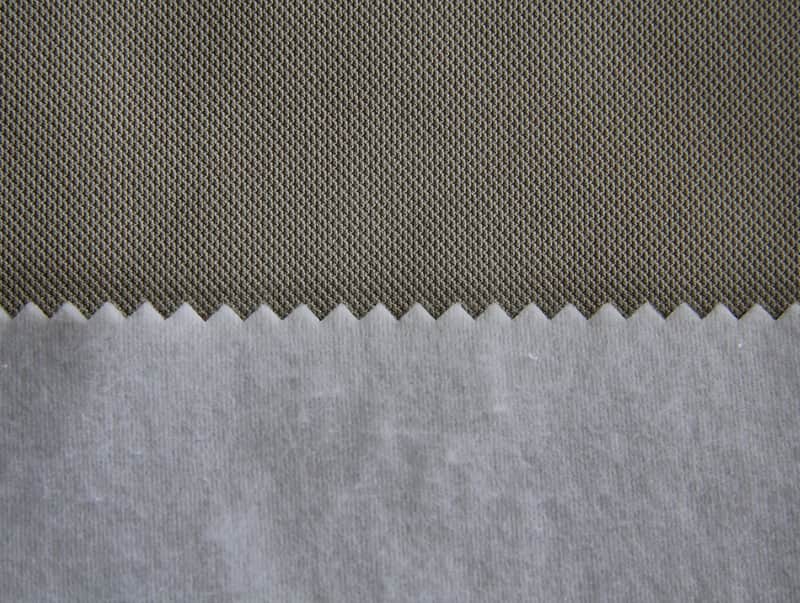
Fabric Construction Methods and Their Effect on Performance
The way in which the chosen fibers are formed into a fabric is the second major compositional variable in automotive base fabric design. Different construction methods produce fabrics with fundamentally different mechanical, dimensional, and surface characteristics.
Woven Base Fabrics
Woven fabrics are produced by interlacing warp and weft yarns at defined angles on a loom. Plain weave, twill weave, and satin weave are the most common constructions used in automotive base fabrics, each offering different combinations of tensile strength, tear resistance, and surface regularity. Woven fabrics have high tensile strength in both warp and weft directions and excellent dimensional stability because the interlaced yarn structure resists elongation under load. They also provide a very consistent, smooth surface that supports uniform PU or PVC coating adhesion without surface irregularities that could telegraph through the coating to the finished surface. The main limitation of woven structures is limited stretch in the bias direction, which can complicate the forming of the finished artificial leather over three-dimensional seat shapes — a consideration that has driven interest in alternative fabric constructions for complex geometries.
Knitted Base Fabrics
Warp-knitted fabrics are the second major base fabric construction used in automotive artificial leather, and they offer a fundamentally different property profile from woven fabrics. Knitted structures are produced by interloping loops of yarn rather than interlacing straight yarns, which gives the resulting fabric inherent stretch in multiple directions. This multi-directional extensibility is highly advantageous for seat cover applications where the artificial leather must be pulled over shaped foam and contoured seat structures without wrinkling, puckering, or localized stress concentrations. Tricot and raschel warp-knit constructions are the most common variants, with tricot fabrics providing a finer, more uniform surface and raschel fabrics offering greater thickness and cushioning contribution. The trade-off of knitted structures is lower dimensional stability under sustained uniaxial tension compared to woven fabrics, which must be managed through careful fabric finishing and, where necessary, the use of heat-setting processes to stabilize the loop structure before lamination.
Nonwoven Base Fabrics
Nonwoven fabrics are produced by bonding or entangling fibers directly into a web structure without weaving or knitting. Needle-punched nonwovens — in which barbed needles mechanically entangle fiber webs — and spunbond nonwovens are used as base fabrics in some lower-cost automotive artificial leather products and in microfiber synthetic leather where the nonwoven structure closely mimics the fibril architecture of natural leather. Nonwovens offer isotropic (equal in all directions) mechanical properties, which provides consistent performance regardless of orientation, and they can be produced in a very wide range of thicknesses and areal weights. Their main limitation compared to woven and knitted fabrics is lower tensile strength per unit weight, which restricts their use to applications where extreme mechanical loading is not a concern.
Key Composition Parameters and Their Automotive Performance Implications
| Composition Parameter | Typical Range | Primary Performance Impact |
| Fiber type | PET, PA6, PA6.6, rPET, blends | Tensile strength, abrasion resistance, hydrolysis resistance |
| Yarn linear density | 75–300 dtex | Fabric weight, hand feel, coating penetration |
| Fabric areal weight | 80–250 g/m² | Total laminate weight, mechanical strength |
| Construction type | Woven, warp-knit, nonwoven | Stretch behavior, dimensional stability, formability |
| Fabric finish | Heat-set, calendered, raised | Surface uniformity, shrinkage resistance, coating adhesion |
| Coloration | Undyed, yarn-dyed, piece-dyed | Color consistency at cut edges, light fastness |
The Role of Foam Backing in the Base Fabric Assembly
In the majority of automotive artificial leather products — particularly those used for seating surfaces — a layer of flexible polyurethane foam is laminated directly to the back of the base fabric before the PU or PVC coating is applied to the face. This foam layer is technically part of the base fabric assembly even though it is not a textile, and its composition has a significant influence on the performance characteristics of the finished material.
The foam layer serves several functions simultaneously. It provides cushioning and a soft, compliant feel when the seat surface is pressed, which is critical for occupant comfort during long journeys. It adds thermal insulation between the occupant and the seat structure, preventing the cold, hard feel of metal or rigid plastic seat frames from being transmitted to the seating surface. It also contributes to the overall thickness of the laminate, which affects the drape and formability of the material during seat cover manufacturing. Foam thicknesses used in automotive artificial leather typically range from 1 mm to 6 mm, with seat surface applications often using 2 mm to 4 mm and door panel applications commonly using 1 mm to 2 mm.
The foam must meet stringent automotive specifications for compression set — its ability to recover its original thickness after sustained compression — as well as resistance to hydrolysis, which causes polyurethane foam to disintegrate over time in humid environments. Foam hydrolysis resistance is specified through accelerated aging tests conducted at elevated temperature and humidity, and only foam grades that pass these tests are considered suitable for automotive interior applications with typical service life requirements of ten years or more.
Automotive Industry Requirements That Shape Base Fabric Specification
The composition of car artificial leather base fabric is ultimately driven by the performance requirements imposed by automotive OEM specifications, which are among the most demanding material performance standards in any consumer product industry. These requirements directly influence every compositional decision from fiber selection through fabric construction and finishing.
- Thermal aging resistance: automotive interior materials must maintain their mechanical and aesthetic properties after extended exposure to elevated temperatures — typically tested at 120°C for 500 hours or more — reflecting the conditions in vehicles parked in hot climates with closed windows
- Light fastness and UV resistance: base fabrics must resist photodegradation from sunlight transmitted through vehicle glazing, typically assessed using xenon arc weatherometer testing to simulate years of service UV exposure
- VOC and fogging emission limits: automotive OEMs impose strict limits on volatile organic compound (VOC) emissions and fogging — the deposition of volatile plasticizers and processing aids on interior glazing surfaces — from all interior materials including artificial leather base fabrics
- Abrasion and pilling resistance: seat cover base fabrics must resist surface pilling and abrasion wear over tens of thousands of simulated seating cycles, assessed using Martindale or Taber abrasion test methods
- Seam and tear strength: the base fabric must provide sufficient tear strength at seam lines and stress concentration points to prevent splitting during seat forming operations and in-service use
- Restricted substance compliance: all fiber, dye, finish, and adhesive components in the base fabric must comply with automotive industry restricted substance lists including REACH, RoHS, and OEM-specific chemical management standards that prohibit hundreds of potentially hazardous substances
Meeting this comprehensive set of requirements simultaneously is what makes the composition of automotive artificial leather base fabric a sophisticated engineering exercise rather than a simple materials selection decision. Each compositional element — fiber type, yarn structure, fabric construction, finishing chemistry, and foam backing specification — must be optimized in concert to deliver a base fabric that passes the full suite of OEM validation tests while remaining manufacturable at commercially viable cost and with consistent quality across large production volumes.